Sport has a way of bringing people together that few other things can match. A shared passion for a game can connect people who come from different countries, speak different languages or have very different backgrounds.
For Australia and India, that connection has traditionally been most visible through cricket. Their rivalry has produced some of international sport's most memorable contests and helped strengthen a relationship that reaches well beyond the boundary.
But there is a much bigger sporting story waiting to be developed.
It includes rugby league, hockey, football, volleyball, squash, tennis, basketball, athletics, kabaddi, Kho Kho and many other disciplines. It involves professional athletes, community clubs, coaches, universities, sporting administrators, technology companies and businesses.
The opportunity is not simply to organise more matches between the two countries. It is to build relationships across the sporting ecosystem: sharing knowledge, developing pathways, creating connections and identifying opportunities that might not otherwise emerge.
That is the ambition behind PlayForward, an Australia–India sporting initiative established to connect sporting organisations, athletes, coaches, clubs, educational institutions and businesses through a collaborative ecosystem.
Two recent milestones have helped bring that ambition into focus: PlayForward's official launch at the Parliament of New South Wales and its subsequent Memorandum of Understanding with NSW Rugby League.
Together, they mark the beginning of a broader conversation about what Australia and India could achieve through sport.
A parliamentary launch bringing the sporting community together
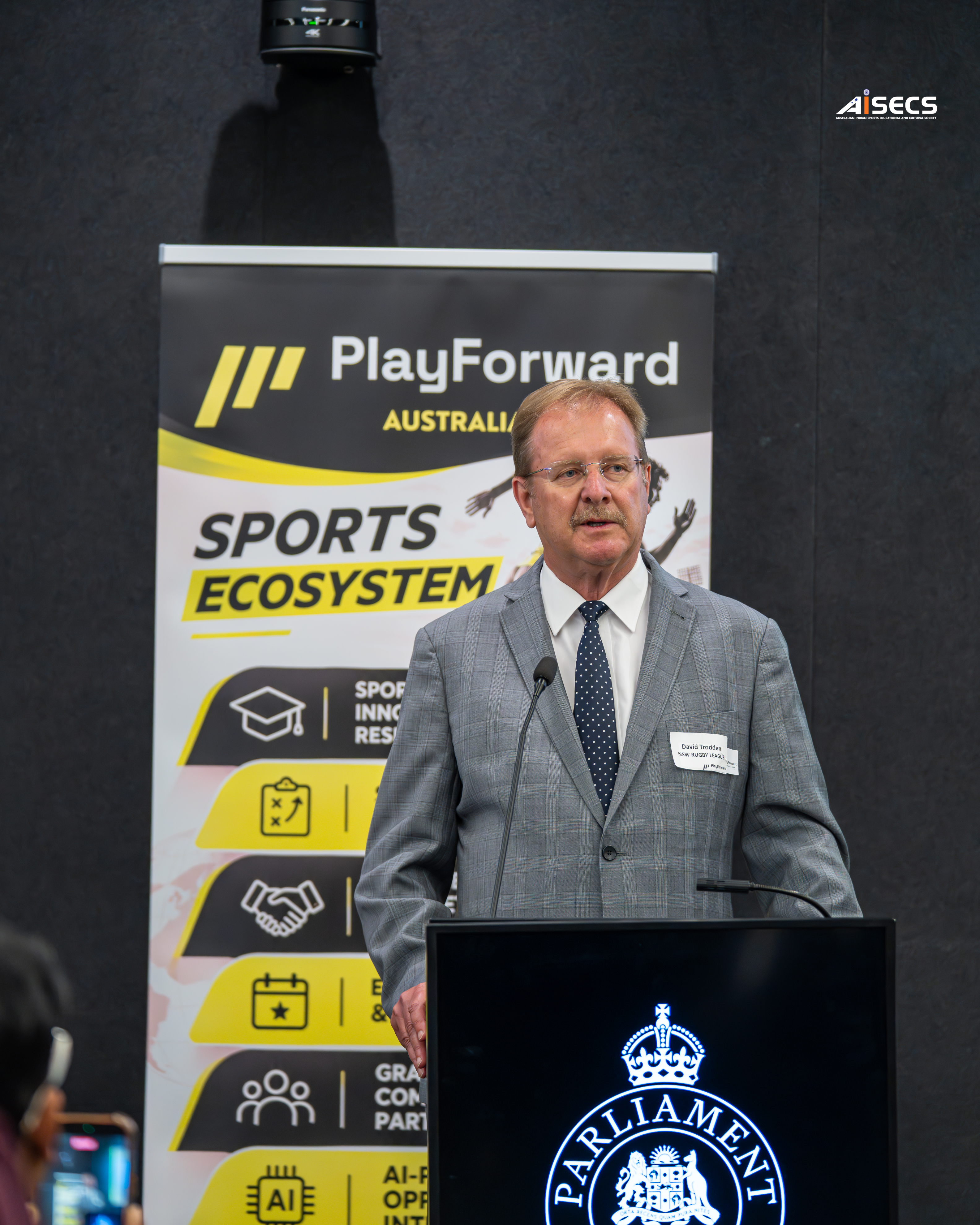
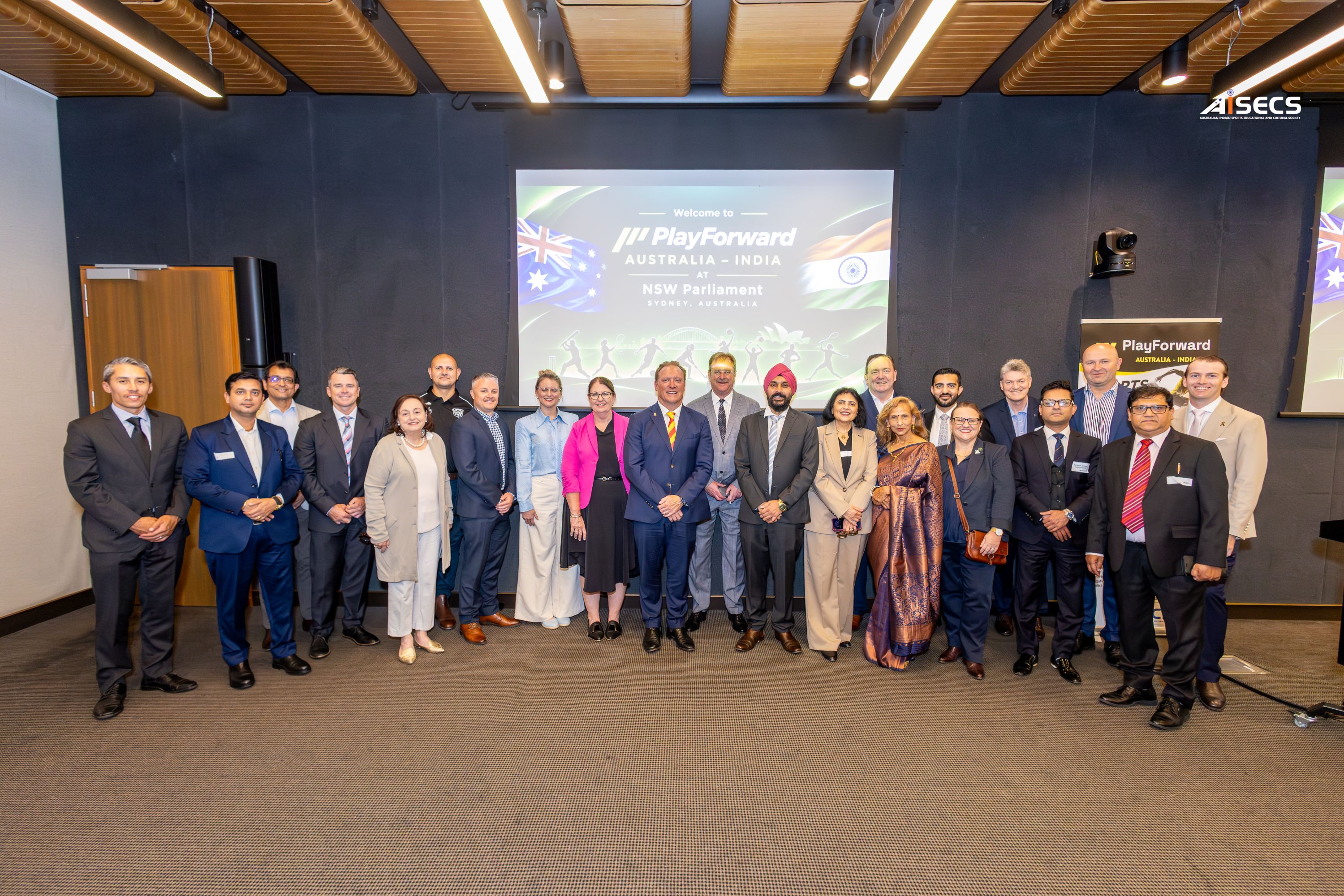
PlayForward's official launch at NSW Parliament House brought together representatives from government, opposition, sporting organisations and the wider community.
The parliamentary representation reflected the breadth of interest in strengthening connections through sport.
Among those present were Natalie Ward MP, NSW Shadow Minister for Sport; Julia Finn MP, representing NSW Premier Chris Minns; Gurmesh Singh MP, Leader of the NSW Nationals; Tim James MP; Nathan Hagarty MP; Charishma Kaliyanda MP; as well as Barbara Ward and Abha Suri.
The occasion also brought together representatives from across the sporting landscape, including Hockey NSW, Squash NSW, Volleyball NSW, NSW Rugby League, Canterbury-Bankstown Bulldogs, Northern NSW Football, the UNSW Centre for Australia–India Relations and other sporting bodies.
That mix was significant. Different sporting codes, institutions and areas of expertise came together in the same room, creating an opportunity to consider how their networks and capabilities might complement one another.
The event was hosted by former professional cricketer Baxter Holt. Having represented Australia at the 2018 ICC Under-19 Cricket World Cup and played professional cricket in Australia, Holt brought a valuable sporting perspective to the occasion.
The launch was an important starting point for a conversation about how Australian and Indian sporting organisations could work more closely together. It also gave PlayForward an opportunity to explain its vision directly to the people and institutions that could help shape its future.
The message was broader than establishing another sporting organisation. It was about creating an environment where existing organisations could connect, explore shared interests and identify opportunities for collaboration.
Why the timing matters: Australia and India enter a decade of sporting opportunity
PlayForward's emergence comes at an important moment in the Australia–India relationship.
On 10 July 2026, Australian Prime Minister Anthony Albanese and Indian Prime Minister Narendra Modi jointly launched the India–Australia Roadmap for Sports Collaboration at the Melbourne Cricket Ground.
The roadmap recognises sport as an important part of the bilateral relationship and identifies practical areas where the two countries can work together.
Its priorities extend across high-performance sport, coaching development, sports science, technology, grassroots participation, para-sport, women's sport, major sporting events and sports industry investment.
It also recognises that meaningful cooperation cannot be delivered by governments or elite sporting bodies alone. Sporting organisations, businesses, universities, state governments and community organisations all have a role to play.
The timing is particularly important because of two major international sporting milestones.
India is preparing to host the 2030 Commonwealth Games in Ahmedabad, while Brisbane will host the 2032 Olympic and Paralympic Games.
These events create a significant opportunity for Australia and India to strengthen sporting relationships, share expertise and explore areas of mutual interest.
The possibilities extend well beyond competition. They include athlete preparation, coaching exchanges, venue development, sports technology, research, event management, broadcasting and commercial investment.
The roadmap also identifies opportunities to introduce sports such as kabaddi and Kho Kho to wider audiences in Australia, while supporting Australian sporting disciplines to reach more people in India.
Just as importantly, the roadmap recognises that a strong sporting relationship must involve communities, educational institutions and the people who make sport possible at grassroots level.
For PlayForward, this creates an opportunity to contribute as a connector within a much wider sporting ecosystem.
The next milestone: PlayForward signs an MOU with NSW Rugby League
Following its parliamentary launch, PlayForward reached another important milestone by signing a Memorandum of Understanding with NSW Rugby League.
For an initiative seeking to connect sporting organisations across Australia and India, establishing a relationship with one of Australia's most established sporting institutions is a significant step.
NSW Rugby League has a history stretching back more than a century. Its work extends across professional pathways, community competitions, junior development, women's participation, regional clubs and the volunteers who support the game.
Its 2026 participation figures illustrate the scale of that community presence.
NSW Rugby League recorded 126,084 registered participants during 2026, its fourth consecutive year of record participation. Female participation reached 35,662, reflecting the continuing growth of women's and girls' involvement in the game.
An independent community impact study also estimated that rugby league contributes approximately $311.6 million to the NSW economy each year.
The study identified benefits beyond financial activity, including community connection, volunteering and public health.
These figures illustrate an important part of PlayForward's thinking: sport is not simply an industry or a competition. It is part of the social fabric of communities.
The MOU provides a foundation for exploring opportunities to connect sporting networks and identify areas of mutual interest between Australia and India.
It also reflects an important principle: international collaboration should build on the expertise and structures of established sporting organisations, rather than attempt to duplicate their work.
The agreement is an important beginning. Its value will ultimately be demonstrated through the practical opportunities, relationships and collaborations that emerge from it.
David Trodden: Leadership beyond the playing field
The NSW Rugby League partnership also brings attention to the leadership of its Chief Executive, David Trodden.
Leading a major sporting organisation involves much more than managing competitions or professional pathways. It requires balancing the demands of elite sport with the realities of community clubs, volunteers, participants, families, facilities and the changing expectations of the sporting public.
Under Trodden's leadership, NSW Rugby League has continued to report record participation, expand opportunities for women and girls and invest in the facilities and programmes that support the game.
Those results reflect the collective work of administrators, clubs, coaches, volunteers and communities across New South Wales.
For PlayForward, building a relationship with an organisation that has extensive experience in sporting administration and development is important.
It creates an opportunity to learn from established structures and explore where those capabilities might connect with the needs and ambitions of the Indian sporting landscape.
The MOU provides a starting point for that conversation. What matters now is the work that follows.
Looking beyond cricket: Why every sporting code matters
One of the central ideas behind PlayForward is that Australia–India sporting collaboration should not be defined by cricket alone.
Cricket may be the most visible connection between the two countries, but opportunities exist across a much wider range of sports.
Hockey
Australia and India have long traditions in international hockey. Coaching, player development, women's competitions and high-performance exchanges provide natural areas to explore. Both countries have sporting knowledge and experience that could contribute to shared development opportunities.
Rugby league
Australia has extensive experience in competition structures, community participation and player development pathways. There may be opportunities to explore knowledge sharing and sporting connections that introduce more people in India to the game while developing relationships between sporting institutions.
Football
School competitions, academies, junior development, coaching and club relationships could create opportunities for young people in both countries. Connections between educational institutions and football organisations may also support longer-term development.
Volleyball and basketball
Both sports offer possibilities for community participation, educational partnerships, youth competitions and athlete development. They can provide accessible pathways that connect schools, clubs and sporting organisations.
Squash and tennis
These established international sports offer opportunities for professional development, coaching exchanges and relationships between sporting institutions. They also provide a foundation for conversations around athlete pathways and competition development.
Kabaddi and Kho Kho
These traditional Indian sports offer an especially interesting opportunity. Their cultural roots and established following in India could help introduce more Australians to sporting disciplines they may not have encountered before.
Para-sport
Sharing knowledge around accessibility, athlete classification, coaching and high-performance development could create important opportunities for inclusive sport. Collaboration in this area can also help institutions consider how accessibility and inclusion are built into sporting programmes from the beginning.
Every sport has its own history, structures, strengths and challenges. The objective is not to impose one model of collaboration on every discipline. It is to help organisations discover where their interests, expertise and capabilities align.
The real opportunity lies with people
International sporting relationships are often discussed through major competitions, professional athletes and government agreements.
But some of the most meaningful outcomes begin with individuals and community organisations.
Consider a young Australian athlete who gets an opportunity to train in India.
An Indian coach who gains access to an Australian development programme.
A regional sporting club that establishes a relationship with an international academy.
A university that collaborates with a sporting organisation on sports science and injury prevention.
A women's sporting organisation that shares its experience and creates opportunities for the next generation.
A community club that connects with another sporting community on the other side of the world.
These examples illustrate the potential of international sporting cooperation when it reaches beyond formal announcements and creates opportunities for people to participate, learn and develop.
They also demonstrate why an accessible and connected sporting ecosystem has value.
The challenge is not simply to identify opportunities. It is to make it easier for the right people and organisations to find one another and explore what they could achieve together.
PlayForward: An ecosystem, not another sporting organisation
PlayForward's ambition is to provide a shared environment where sporting organisations, clubs, academies, athletes, coaches, educational institutions and businesses can establish connections and explore opportunities.
The idea is to bring different parts of the sporting ecosystem into one connected environment.
Sporting organisations can showcase their work, establish their presence and connect with others.
Athletes and coaches can develop their networks and discover potential pathways.
Educational institutions can explore relationships with sporting organisations and industry.
Businesses can identify opportunities across sports technology, equipment, events, media and investment.
For Indian sporting organisations, PlayForward offers an opportunity to build connections with Australia's sporting community. Equally, Australian organisations can explore relationships and opportunities across India's enormous sporting landscape.
The intention is to complement existing sporting networks, not compete with them.
Established sporting bodies already have the expertise, structures, participants and relationships that make their sports successful. PlayForward's ambition is to help create additional connections between those existing strengths and potential partners across the two countries.
The parliamentary launch demonstrated the importance of bringing people together. The NSW Rugby League MOU represents an early example of building relationships with established institutions.
However, PlayForward's long-term ambition depends on participation from a much wider sporting community.
An open invitation to Australian and Indian sporting organisations
The next chapter of PlayForward cannot be written by one organisation alone.
It needs the participation of sporting federations, national and state sporting bodies, community clubs, academies, schools, universities, athletes, coaches, businesses and people who believe in the power of sport.
PlayForward is inviting Australian sporting organisations to explore joining its ecosystem.
Indian sporting federations, associations, academies, clubs, universities and sports businesses are equally encouraged to make contact and explore opportunities for collaboration.
The areas of interest could include athlete exchanges, coaching, sports education, community participation, research, technology, international events or commercial partnerships.
There is no single model that every organisation needs to follow. The starting point is a conversation about shared interests, capabilities and what a meaningful relationship could look like.
The aspiration is to build relationships that deliver value to both countries and create opportunities that extend beyond individual events or announcements.
The parliamentary launch and the NSW Rugby League MOU are important milestones. But the real achievement will be what the sporting community builds together from here.
Taking sport forward, together
Australia and India already share a powerful sporting relationship. The next challenge is to make it broader, more connected and more accessible.
The India–Australia Roadmap for Sports Collaboration has established an important direction. Sporting organisations bring the expertise, athletes and communities bring the energy, and partnerships provide the opportunity to turn shared ambition into action.
PlayForward wants to be part of that journey.
It wants to work with organisations that have already built something meaningful, support those looking to grow and connect people who might otherwise never have had the opportunity to work together.
From a local community club in New South Wales to a sporting academy in India, every connection has the potential to create something worthwhile.
The parliamentary launch was the beginning. The NSW Rugby League partnership is another step forward.
Now comes the more important work: bringing more sporting organisations into the conversation and building an ecosystem that belongs to everyone willing to participate.
We want to be part of your journey, and we want you to be part of ours.
Because the future of sport is not about one organisation going further alone. It is about what we can achieve when we move forward together.
TAKE SPORT FORWARD. PLAYFORWARD.
Visit: www.playforward.au
For Australian and Indian sporting organisations interested in joining the ecosystem or exploring collaboration, connect with the PlayForward team.
PlayForward articles distinguish official sources from PlayForward explanation. Nothing here is government policy.