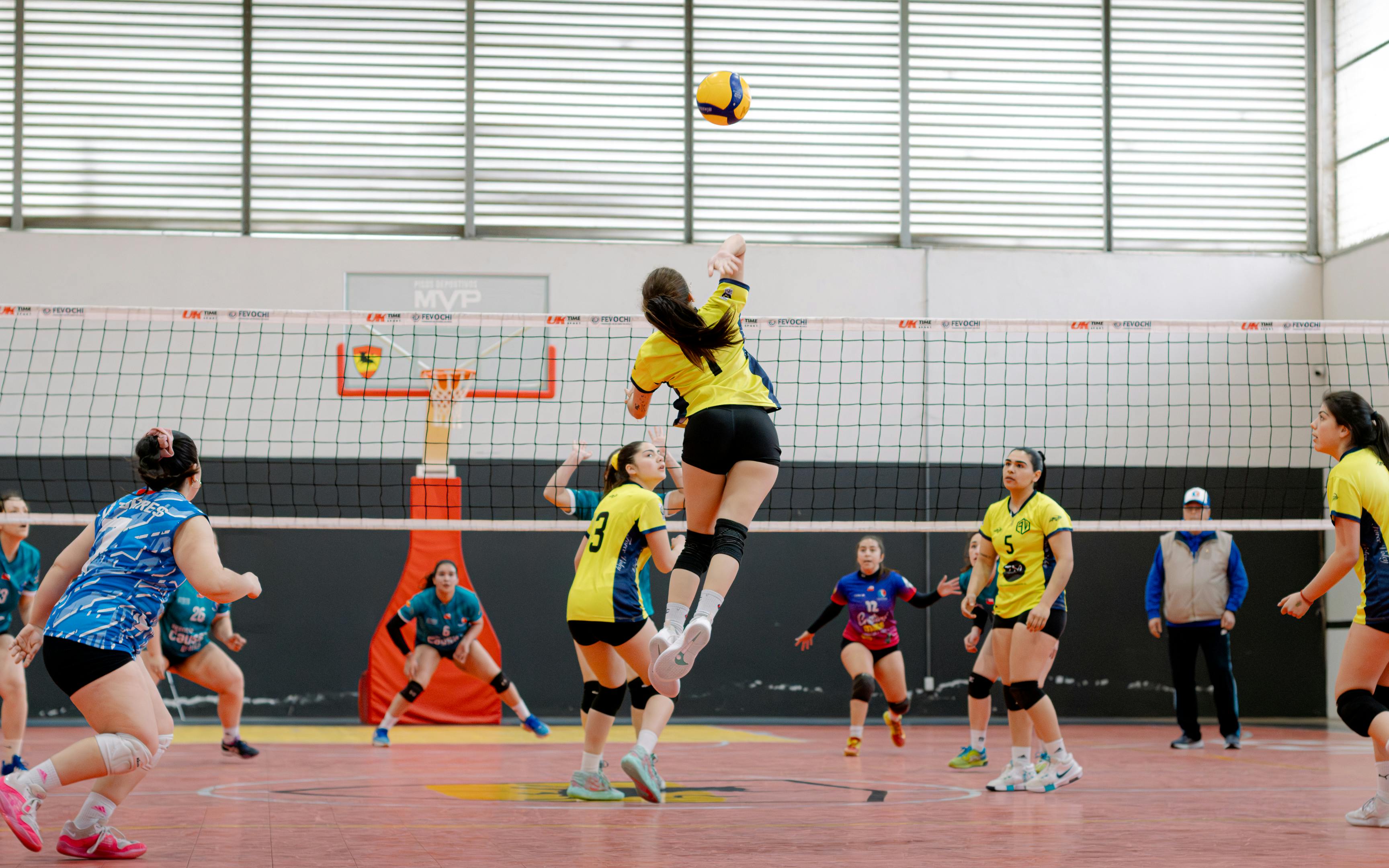
When people talk about women's sport, the conversation often begins with a champion: an athlete who wins a medal, leads a national team or inspires a generation. Those achievements matter. But behind every athlete is a wider system — opportunities to participate, qualified coaches, appropriate facilities, medical and performance support, competitions, funding, mentors and people willing to open doors.
If Australia and India want to build a stronger sporting relationship, that wider system deserves just as much attention as the results on the scoreboard.
This is why the Women in Sports Partnership, included in the India–Australia Roadmap for Sports Collaboration launched in July 2026, is an important area of bilateral cooperation. It identifies joint initiatives to promote women's leadership, health, high performance and participation in sport. It also identifies bilateral tournaments for women athletes and proposes drawing on flagship programmes of the Australian Sports Commission.
The Roadmap establishes a direction for cooperation. The real opportunity now is to turn that direction into practical, evidence-informed work that benefits women and girls across both countries.
Why this partnership matters
Australia and India have different sporting systems, development pathways, resources and social contexts. Neither country can simply copy the other's model and expect identical results. But both have experience, expertise and lessons that may be useful to share.
The Australian Sports Commission has programmes focused on women's leadership and the development of women coaches. India's Ministry of Youth Affairs and Sports has used the Khelo India programme to support competitions and opportunities for women athletes.
These are existing initiatives that provide possible starting points for learning and collaboration. They do not mean the two countries have already established every activity proposed in the new bilateral partnership.
The opportunity is to identify what works, understand why it works and explore whether that knowledge can be adapted to meet the needs of sporting organisations and communities in the other country.
Participation: building the pathway before the podium
A high-performance athlete's journey often begins long before national selection. It may start at school, a local club, a community competition or a training centre. If opportunities to participate are limited, expensive, inaccessible or difficult to sustain, the pathway narrows before talent has a chance to develop.
India has already taken steps to expand women's competition opportunities through Khelo India.
According to the Indian Ministry of Youth Affairs and Sports' 2023–24 annual report, women's sports leagues had been organised across 21 sporting disciplines in 26 states and union territories, involving 60,147 women athletes in 575 competitions. The report also describes the ASMITA initiative — Achieving Sports Milestone by Inspiring Women through Action — established to give women's leagues a distinct identity and promote women's participation.
These figures describe reported programme activity, not the total number of women playing sport in India. They nevertheless demonstrate the scale of one government-supported effort to create competitive opportunities.
Australia also has established participation and inclusion programmes. The Australian Sports Commission's Play Well strategy emphasises opportunities for people to participate in sport and physical activity, while its work on women and girls addresses barriers to access and involvement.
Australia and India could explore sharing practical lessons in areas such as school sport, community competitions, coach education, club development and pathways from introductory participation to organised competition.
The most useful question is not simply how many events can be staged. It is whether women and girls can continue participating, develop their skills, access appropriate coaching and progress if they wish to compete at higher levels.
High performance: supporting the whole athlete
Elite sport requires more than talent and determination. It involves specialist coaching, strength and conditioning, nutrition, injury prevention, rehabilitation, psychology, recovery and performance analysis.
The Roadmap identifies women's high performance as an area for cooperation. Its wider capacity-building and sports-science priorities include coach development, high-performance expertise, research, athlete performance analytics, sports nutrition, injury prevention, wearable technology and recovery techniques.
These priorities create possible connections between Australian and Indian sporting organisations, universities, sports medicine professionals and research teams.
For women's sport, such collaboration could explore questions that deserve careful, sport-specific investigation: how training loads are managed, how athletes receive appropriate medical support, how injury risks are assessed and how performance programmes account for individual needs.
The aim should not be to assume that all women athletes have the same requirements. Nor should research findings be transferred uncritically between sports or populations. Good high-performance practice depends on appropriate evidence, qualified professionals and the circumstances of each athlete.
The Roadmap provides a basis for exploring collaboration; individual projects would still need partners, agreed objectives, resources and suitable safeguards.
The coaching gap: developing more women who lead
One of the most important challenges in sport is ensuring that women can progress into coaching and leadership, not only compete as athletes.
The Australian Institute of Sport has identified the under-representation of women in high-performance coaching as a systemic concern. In June 2025, the Australian Sports Commission reported that women held approximately 10% of head-coaching roles in Australian sport. The figure was reported in the context of its work to strengthen women's high-performance coaching pathways.
This is not a measure of all Australian coaches, nor is it a comparison with India. It highlights a specific challenge within Australia's high-performance system.
Australia has responded through initiatives including the Women in High Performance Coaching Action Plan and programmes designed to develop coaches' experience, networks and career progression. Its Women Leaders in Sport programme also supports women working or volunteering in sporting administration, coaching and other roles.
The Roadmap specifically identifies two-way coach and coach-educator exchanges as a capacity-building priority. It also proposes a train-the-trainer approach where appropriate.
This offers a practical foundation for exploring women's coaching development across the two countries. Potential activities could include professional learning, mentoring, observation opportunities and structured exchanges between relevant organisations.
The key is to build lasting capability, rather than relying only on one-off workshops. Coaches need opportunities to apply what they learn, receive feedback and progress into roles where they can influence athletes and the next generation of coaches.
Leadership beyond the playing field
Women contribute to sport as board directors, administrators, officials, researchers, event managers, medical professionals, entrepreneurs and decision-makers. Their representation in these roles affects how sporting organisations understand their participants and make decisions.
Australia has introduced a National Gender Equity in Sport Governance Policy that sets gender-equity targets for the governance of funded national sporting organisations. The Australian Sports Commission announced the policy in September 2024, including targets relating to women and gender-diverse people on boards, as board chairs and on specified board committees.
The policy is an Australian governance measure, not an India–Australia bilateral requirement. However, it illustrates one way Australia has approached representation in sports leadership.
The Roadmap's Women in Sports Partnership expressly identifies women's leadership as a cooperation priority. Australian and Indian organisations could explore leadership development, governance education, mentoring and professional networks that help women contribute at every level of sport.
This also has a commercial dimension. Women in leadership can contribute to decisions about facilities, products, sponsorship, athlete services and events. Creating meaningful opportunities for women across the sporting workforce can broaden the range of experience and expertise available to the industry.
Progress should be assessed through evidence: who has access to leadership development, who advances into decision-making roles and whether organisations create environments in which people can contribute and remain.
Health, safety and athlete wellbeing
The Roadmap also identifies women's health as a priority. This is important because athlete wellbeing is central to sustainable participation and performance.
Sporting organisations need to consider the full experience of women athletes, including access to appropriate health information, qualified medical care, safe training environments, injury management and support throughout their sporting careers.
Collaboration between universities, health professionals, sports scientists and sporting bodies could help identify research questions and share relevant expertise. Any medical or performance programme should be evidence-based, appropriately governed and adapted to the people it serves.
Safety and inclusion also matter outside the training environment. Athletes should have access to suitable reporting mechanisms, clear standards of conduct and organisational processes for responding to concerns.
These are not matters to be solved through publicity alone. They require policies, qualified people, resources and accountability.
A credible partnership should therefore consider wellbeing as part of the sporting system, rather than treating it as an optional addition to performance programmes.
Bilateral tournaments: more than a fixture
The Roadmap specifically identifies bilateral tournaments for women athletes as a possible area of cooperation.
Well-designed tournaments can provide competition experience, expose athletes and coaches to different playing styles and create opportunities for sporting organisations to build relationships. They may also create occasions for professional exchange between coaches, officials and support staff.
However, a tournament is not automatically a development programme. Its value depends on the level of competition, preparation, athlete support, access and the plans that follow it.
The two countries could explore opportunities through relevant sporting bodies, with each sport requiring its own assessment of demand, scheduling, facilities, funding and governance.
The Roadmap establishes the intention to pursue cooperation, but it does not mean that a calendar of bilateral women's tournaments has already been agreed across sports.
That distinction matters. The aim should be to build credible competitions that contribute to athlete development and long-term relationships, not to announce events before the necessary arrangements exist.
Ahmedabad 2030 and Brisbane 2032: an opportunity to build lasting capability
The 2030 Commonwealth Games in Ahmedabad and the Brisbane 2032 Olympic and Paralympic Games create a longer horizon for Australia–India sporting cooperation.
The Roadmap encourages reciprocal arrangements between sporting bodies around major events, including shared facilities, competitions and support networks. It also identifies high-performance development, coaching and sports-science collaboration as areas for cooperation.
Women's sport should be part of that preparation from the outset. Relevant organisations can explore how athlete pathways, coaching, health support, leadership, accessibility and event operations might benefit from shared learning.
The value should not be measured solely by what happens during the Games. Major events can provide a focus for developing expertise and relationships, but lasting benefits require sustained work before and after the competition.
Neither the Roadmap nor the existence of the Games guarantees funding or appointments for any particular programme or organisation. Practical projects will need suitable partners, agreed responsibilities and resources.
Where PlayForward Australia–India fits
The Women in Sports Partnership creates an opportunity for organisations to identify where their experience can contribute to a stronger sporting relationship.
PlayForward Australia–India is being developed to help connect people and organisations across this wider sports ecosystem. That includes women's sporting organisations, athletes, coaches, officials, universities, researchers, health and performance professionals, businesses, community clubs and organisations working to improve participation and inclusion.
The role is to help surface relevant opportunities and encourage conversations that may lead to practical collaboration — whether around coach development, research, women's competitions, sports technology, athlete wellbeing or professional networks.
PlayForward is not a government programme or an official delivery partner of the Roadmap. It cannot guarantee funding, tournament places, contracts, introductions or sporting outcomes. Any collaboration would depend on the organisations involved and the arrangements they establish.
But there is room for more people to contribute to the conversation, including organisations that may have valuable experience but do not yet have established connections across both countries.
If you work in women's sport, lead a sporting organisation, coach athletes, conduct research, develop sports technology or support community participation, we welcome your interest.
The future of women's sport will not be built by athletes alone. It will be shaped by the coaches who develop them, the leaders who make decisions, the researchers who improve knowledge, the organisations that create opportunities and the communities that support participation.
Join PlayForward Australia–India. Bring your experience, your ideas and your ambition. Let's explore how Australia and India can learn from one another and turn the Women in Sports Partnership into meaningful opportunities for women and girls — on the field, in leadership and throughout the sporting ecosystem.
PlayForward लेख आधिकारिक स्रोतों और स्वतंत्र व्याख्या को अलग रखते हैं। यहाँ कुछ सरकारी नीति नहीं है।