The opportunity is significant, but the real test will be whether these projects create lasting expertise, stronger institutions and a more connected sporting ecosystem.
Expressions of interest are open. Closing date: 4 December 2026, 5:00 pm AEDT.
The next phase of Australia–India sports collaboration may not be decided by a major international match, a stadium announcement or a high-profile sporting delegation. It could begin with a university research team, a sports institute, a coaching organisation or a group of specialists trying to solve a practical problem in athlete development.
That is the proposition behind the new Khel Connect Innovation Partnership Projects, announced by the Australia India Institute on 12 November.
The initiative is seeking expressions of interest from Australian and Indian organisations that want to form consortia and deliver collaborative projects in sports education and innovation. Each proposed project can be valued at up to A$50,000, with submissions assessed by an expert panel. The number of projects selected will depend on the panel's recommendations. The programme is delivered by the Australia India Institute on behalf of the Australian Government Department of Education.
Australia India Institute+1It is a meaningful development because it moves Khel Connect beyond the conference and networking stage. The symposium in Chennai brought organisations together to identify shared interests and potential partnerships. The new project opportunity asks those organisations to take the next step: agree on a problem, combine their capabilities and produce something tangible.
That is where the real value of the initiative will be measured.
From a two-day symposium to practical collaboration
Khel Connect is the Australia India Institute's Australia–India Sports Education and Innovation Pathways programme. Its two-day symposium was held on 12 and 13 October 2026 at the Indian Institute of Technology Madras in Chennai, with online participation.
The symposium brought together representatives from higher education, sport, industry and government. Its first day focused on knowledge exchange and expert discussions. The second moved towards partnership development, with structured pitches and discussions organised around the programme's three specialisation areas.
Australia India Institute+1The distinction between a symposium and a project programme matters.
Conferences can create useful introductions and expose participants to new ideas. But introductions do not automatically become research partnerships, improved coaching systems or new education pathways. That requires organisations to agree on what they will do together, who will contribute, how the work will be delivered and what will remain when the activity is complete.
Khel Connect's Innovation Partnership Projects are designed to create that next step. The live programme information describes a consortium model in which Australian and Indian organisations work together on a defined project. It also requires tangible outputs, rather than simply a programme of meetings or an exchange visit.
The programme overview published by the Australia India Institute describes a total seeding-grant pool of A$150,000 across the three specialisations. The current project call, however, states that each proposal may be valued at up to A$50,000 and that the number of projects will be determined through expert assessment. Applicants should therefore rely on the current expression-of-interest documents for the operative requirements, rather than assume that one project in each category is guaranteed. Australia India Institute+1
Three priorities, and a much wider sporting agenda
The call identifies three priority specialisations. They cover considerably more ground than elite athlete performance alone.
1. Athlete and coach development pathways and high-performance support services
This area includes sports science, sports medicine, biomechanics, strength and conditioning, sports nutrition, performance psychology, sport analytics, sensing technologies, physiology, training environments, athlete and coach wellbeing, safeguarding, recovery and injury rehabilitation.
ARCH-IndiaThere is a clear opportunity here for universities, sports institutes, professional clubs, national and state sporting organisations, sports medicine providers and technology companies.
A useful project might examine how a particular athlete-support service could be adapted for use in both countries. Another could develop a shared training resource for coaches or explore how sports science research can be translated into day-to-day practice.
The important point is that the project should address a defined need. A proposal that simply promises to exchange coaching ideas may be too broad. A stronger one would identify the coaching group or athlete pathway it intends to support, the capability gap it seeks to address, the partners who will contribute and the resource or model that will be produced.
2. Community sports development and adaptive physical education
The second specialisation takes the initiative beyond elite sport. It includes safe and inclusive sporting environments, coaching practices, adaptive physical education, community sport management and governance, safeguarding, health equity, school and university curricula, women's and girls' participation, volunteer development, facility operations and community engagement.
This is potentially one of the most important areas for long-term impact.
The strength of a sporting system cannot be measured only by international medals or professional leagues. It also depends on whether children can access quality physical education, whether women and girls have safe opportunities to participate, whether people with disability can take part, whether community coaches are supported and whether local organisations have the skills to run sustainable programmes.
Australia and India have different population sizes, sporting structures, education systems, community needs and resource constraints. That makes direct transfer of a programme from one country to the other unlikely to be sufficient. The more useful approach is joint design: identify a shared challenge, understand the local setting in each country and develop a model that can be adapted rather than copied.
For example, a university and community sports organisation could work with an Indian partner on an adaptive physical education resource. Another consortium might develop coach education materials focused on safe participation for girls, or a practical framework for volunteer training and community club governance.
These are illustrative possibilities, not announced projects. The value lies in the scope the programme makes eligible.
3. Major-event capability, sports business, innovation and commercialisation
The third area connects sport with industry and the business of delivering major events. It covers sports business education, market development, commercialisation, sponsorship, sports entrepreneurship, technology innovation, digital fan engagement, sports integrity, workforce development and the planning, delivery and legacy of major sporting events. Venue operations, procurement, accessibility and sustainability are also included.
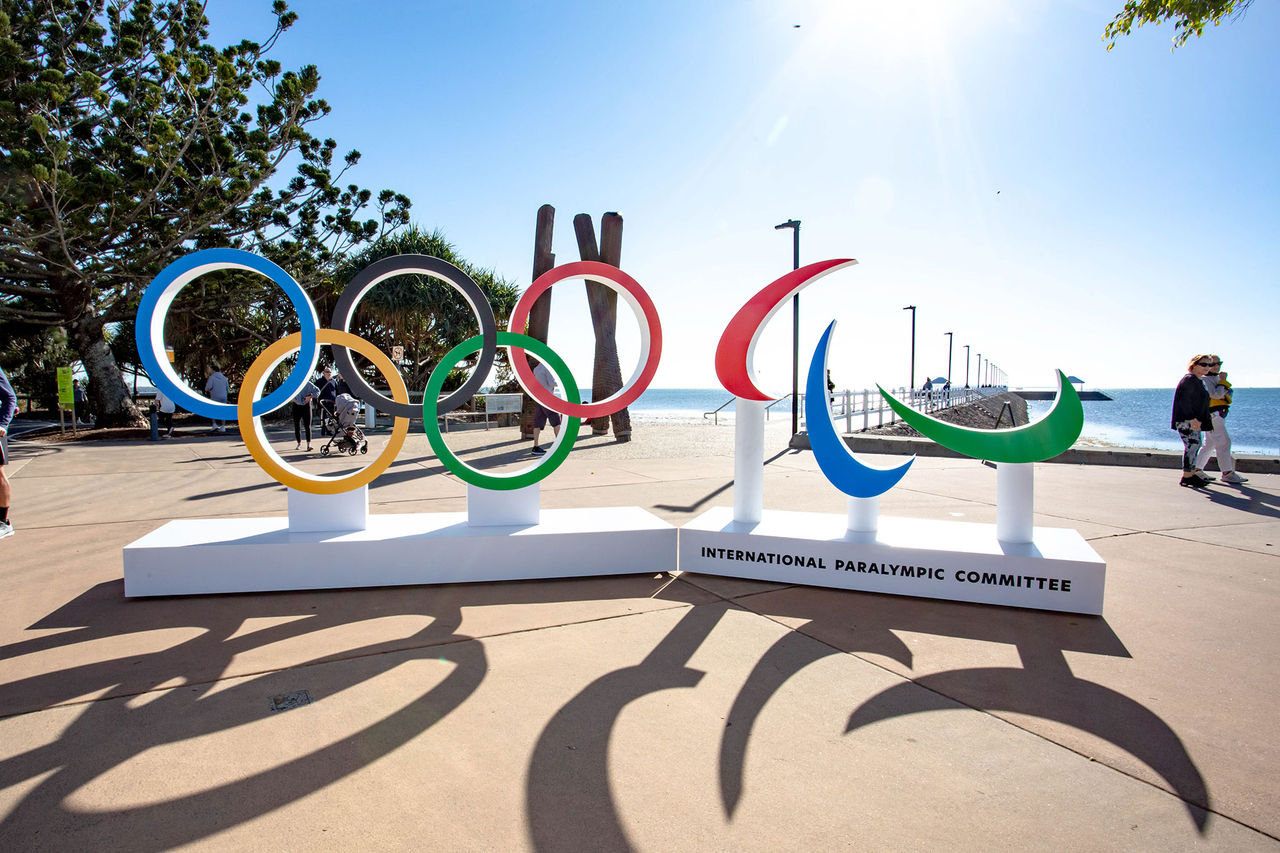
ARCH-IndiaThis is particularly relevant as India prepares for the 2030 Commonwealth Games in Ahmedabad, while Brisbane is due to host the 2032 Olympic and Paralympic Games.
The two events create a period in which Australia and India have reasons to exchange knowledge about event operations, venue management, workforce development, accessibility, technology and long-term community benefit. India's ambitions also extend beyond the Commonwealth Games, with the India–Australia Sports Collaboration Roadmap recognising India's interest in hosting a future Olympic and Paralympic Games.
Press Information BureauHowever, the opportunity should not be reduced to a claim that Australian organisations will automatically win work connected with Ahmedabad 2030 or Brisbane 2032. Khel Connect is an education and innovation collaboration initiative. It does not announce event contracts, procurement opportunities or formal partnerships with the organising committees.
Its potential contribution is earlier and more foundational: helping organisations develop the knowledge, research, workforce skills and institutional relationships that may be useful as major-event capabilities grow.
The consortium requirement is central, not administrative
The eligibility rules are important because this is not an individual scholarship or a stand-alone grant for an organisation working alone.
An eligible expression of interest must be submitted by a consortium involving at least two organisations, including at least one organisation based in Australia and at least one based in India. The consortium must include at least one tertiary education provider. Cross-sector representation is encouraged, including universities, sporting organisations, industry bodies and other relevant organisations.
The lead organisation must be Australian, have a current Australian Business Number and take responsibility for the contractual obligations of the consortium. Sole traders cannot act as the lead organisation.
Every consortium member must be identified in the expression of interest. The lead organisation must provide a signed letter of support from an authorised representative of each partner. Those letters must explain the partner's role, its contribution of people, facilities, expertise or other resources, its commitment to participate and any relevant conflicts of interest.
ARCH-IndiaThese requirements are more than paperwork. They are designed to test whether the proposed partnership is real.
A university should not be added to an application simply to satisfy the tertiary education requirement. Nor should a sporting organisation be named as a partner if it has no meaningful role in the work. A credible consortium needs to show why each member is necessary and what each will contribute.
The Australian lead also carries responsibility for delivery and compliance. That means partners need to agree on governance, project management, responsibilities, timelines and the handling of any changes before the project begins.
For Indian organisations, the practical message is straightforward: identify a suitable Australian lead and an eligible tertiary education partner early. For Australian organisations, the task is not simply to find an Indian name to include. It is to develop a partnership in which the Indian organisation has a substantive role in defining and delivering the project.
What must the projects actually deliver?
The programme calls for tangible outputs that support scalable sports capacity-building. The official project information lists possible forms of work including proof-of-concept activities, feasibility studies, pilot projects, capability-development initiatives, education and training resources, governance tools and other activities that advance sports education and innovation.
ARCH-IndiaThis is a useful signal about the level of ambition expected.
A project does not need to solve a national sporting challenge in a few months. It does need to produce something that can be assessed and potentially built upon. That might be a tested coaching resource, a feasibility study for a joint sports science programme, a pilot for inclusive community participation, a practical event-workforce training module or a governance framework for a particular sporting context.
The strongest proposals will likely be specific about the problem they are addressing and realistic about what can be achieved within the available time and resources.
They should also explain who will use the output. A research report that is never applied may have limited value. A training resource that is not adopted by coaches or institutions may not create lasting capability. A pilot that cannot be sustained after the project ends may have little influence beyond its initial participants.
The question should not simply be, "What can we deliver by May?" It should also be, "Who will use it in June, next year and beyond?"
The timetable is demanding
The expression-of-interest period opened on 12 November 2026 and closes at 5:00 pm AEDT on Friday, 4 December.
The Australia India Institute will hold an online information session on Monday, 23 November, from 3:30 pm to 4:30 pm AEDT, equivalent to 10:00 am to 11:00 am Indian Standard Time. The final date for questions is 30 November at 5:00 pm AEDT.
The published timetable then moves quickly:
Outcomes are expected to be notified in the week commencing 14 December 2026.
Successful lead organisations are expected to sign service agreements by 23 December.
Interim reports are due on 19 March 2027.
Final outputs, the final report and a case study are due on 21 May 2027.
This timetable has practical consequences. A consortium cannot wait until after selection to work out what the project is supposed to achieve. It needs to have a defined scope, partner commitments, an achievable work plan and a realistic budget before submitting its expression of interest.
The period between the anticipated agreement date and final outputs is relatively short. That favours projects with a clear, contained purpose and partners who are ready to begin. It may be less suitable for proposals that depend on lengthy institutional approvals, extensive new infrastructure or complex research requiring a long period of data collection.
The programme's online collaboration directory is designed to help organisations identify potential Australian and Indian partners. It includes organisational profiles and contact details for organisations that have registered, including symposium participants. Researchers are also encouraged to register on ARCH-India.
For organisations that do not yet have a partner, this is a practical starting point. It is not a guarantee of a suitable match, but it provides a route to identifying institutions with relevant interests and capabilities.
Why this matters in the wider Australia–India sports relationship
Khel Connect does not exist in isolation. It aligns with the India–Australia Roadmap for Sports Collaboration, published in July 2026.
The roadmap identifies a broad set of priorities: high-performance capability, coach development, para-sport, sports science and technology research, major-event cooperation, sports industry engagement and women's sport. It also recognises the roles of sporting organisations, businesses, state-level governments, universities and community groups in building stronger connections.
Press Information BureauThe roadmap is significant because it acknowledges that the two countries have different sporting governance structures and different levels of development across their sporting ecosystems. It calls for pragmatic, outcomes-focused cooperation, with activities prioritised according to available resources and major-event timelines.
That is a useful principle for Khel Connect applicants. The objective should not be to replicate an Australian system in India or an Indian model in Australia. It should be to identify where the two countries have complementary strengths and where working together can produce something that neither partner could achieve as effectively alone.
Australia has experience in areas such as coach education, high-performance support, sports science, event delivery and inclusive sport. India has a large and diverse sporting environment, a growing sports industry, established sporting institutions and significant ambitions for future major events. These broad strengths do not mean that every Australian organisation is automatically suited to every Indian opportunity. The right partnership depends on the specific sport, the local context and the capabilities of the people involved.
The Khel Connect model has the potential to bring those capabilities together in a structured way.
The devil is in the delivery
There are reasons to welcome this initiative, but there are also questions that should not be ignored.
First, the value of up to A$50,000 is useful seed funding, but it is not enough to build a large-scale programme across two countries. Applicants will need to keep their ambitions proportionate to the budget and timeline. The aim should be to establish a credible pilot, test a model or develop a resource that can attract further support, not promise a transformation that the project cannot deliver.
Second, the short delivery window makes sustainability more than a slogan. If a project is designed around a single visit or workshop, its long-term effect may be limited. The partners should decide from the outset who owns the outputs, who will maintain them, how they will be used and what resources will be required to continue the work.
Third, bilateral collaboration must be genuinely reciprocal. Indian partners should not be treated simply as recipients of Australian expertise. They bring their own research, coaching knowledge, institutional experience, community understanding and sporting innovations. A strong project should show what both sides will learn and contribute.
Fourth, the programme covers three broad specialisations, but each project needs a defined focus. Trying to cover elite performance, community sport, digital technology and major events in one small project would risk producing a list of activities rather than a coherent outcome.
Finally, success should be measured by more than the number of meetings, participants or documents produced. More meaningful indicators could include whether a resource is adopted, whether a pilot is repeated, whether coaches apply new methods, whether a university relationship continues or whether a community programme reaches participants who were previously excluded.
These are not reasons to be cautious about collaboration. They are reasons to design it properly.
What this means for PlayForward
For PlayForward Australia–India, Khel Connect is an important development because it gives practical shape to several themes that sit at the centre of the emerging sporting relationship.
It connects education with sport, research with practical delivery, and institutional cooperation with industry and community needs. It also shows why the Australia–India sporting relationship should not be understood only through cricket, major tournaments or professional sport.
There are opportunities in sports science, coaching, adaptive physical education, women's participation, sports technology, event management, commercialisation and the development of the people who make sporting systems work.
PlayForward's role is to help organisations understand these developments, follow the official opportunities, distinguish announced programmes from potential future projects, and identify the areas where their capabilities may be relevant. It is an independent information and collaboration platform, not a Khel Connect delivery partner, funding administrator or representative of the Australian Government.
The next few weeks will reveal how many organisations are ready to move from interest to a credible proposal. The more important test will come later: whether the projects selected produce resources, relationships and capabilities that continue to be used after May 2027.
The symposium created a space for conversation. The Innovation Partnership Projects now offer a route to action.
The next chapter of Australia–India sport will be shaped not only by the competitions the two countries stage, but by the knowledge, people and institutions they build together.
- Khel Connect Innovation Partnership Projects: eligibility, priority areas, timetable and application information
- Australia India Institute: announcement of the Innovation Partnership Projects, 12 November 2026
- Khel Connect Symposium, IIT Madras, 12–13 October 2026
PlayForward articles distinguish official sources from PlayForward explanation. Nothing here is government policy.