From announcement to delivery
For Brisbane, this announcement matters because the city has spent years debating where and how to deliver its major indoor arena.
On 15 November 2026, the Queensland Government named Gather Brisbane as the successful consortium to design, build, finance, maintain and operate the new arena. Its partners are Plenary, Live Nation, Oak View Group and Webuild.
The project is intended to replace the ageing Brisbane Entertainment Centre at Boondall. The new venue is planned to accommodate up to 17,000 people for sporting and entertainment events, with capacity rising to 18,700 in concert configuration. Construction is expected to start in early 2027, with completion targeted for 2031.
Ministerial Media Statements+1The financial arrangement is also significant. The State Government has committed a one-off $600 million contribution after the arena is delivered and opened. The private consortium will take responsibility for maintenance and future refurbishments under a long-term commercial arrangement, while the State retains ownership of the arena land until at least 2071.
Ministerial Media Statements+1This is more than a new venue. It is a different approach to delivering major sporting and entertainment infrastructure through a long-term partnership between government and private operators.
A new sporting stage for Brisbane
The arena is being developed with both sport and entertainment in mind. Its scale and flexibility could make it an important venue for indoor sports, including basketball and other court-based competitions.
Its timing is particularly important. Opening in 2031 would give Brisbane a major new indoor venue before the 2032 Games, potentially supporting event preparation, athlete competition and the city's capacity to attract international sporting events.
However, a new arena does not automatically create a stronger sporting system.
A world-class venue can host world-class competitions, but the strength of a sporting city is also measured by what happens outside its major event calendar. It depends on the quality of coaching, school participation, accessible community facilities, pathways for young athletes, sports science, injury prevention and support for athlete wellbeing.
The arena can provide the stage. The broader sporting ecosystem must provide the people, programmes and opportunities that make the stage meaningful.
The question of legacy: who benefits after 2032?
One of the most important elements of the Woolloongabba announcement is what happens to the surrounding precinct.
Following the 2032 Olympic and Paralympic Games, the existing Gabba Stadium is scheduled to be decommissioned. The site is intended to make way for almost 4,000 homes, alongside open public spaces and new community connections. The wider precinct is also planned to include hospitality, public plazas and improved pedestrian access.
Ministerial Media Statements+1That creates an opportunity to think about legacy in a broader way.
Will the redevelopment make sport and physical activity more accessible to local residents? Will young people have opportunities to participate in organised sport? Will community organisations be able to access facilities and programmes? Will the precinct connect major sporting events with everyday recreation?
These are important questions because Olympic legacy should not be measured only in infrastructure, visitor numbers or international television coverage.
It should also be measured in participation, inclusion, skills, health and opportunities that remain long after the Games have finished.
The opportunity for Australia–India sporting collaboration
Developments such as Woolloongabba also create a timely opportunity to consider Australia's international sporting relationships, particularly with India.
The India–Australia Roadmap for Sports Collaboration identifies opportunities for cooperation in physical education, coach and coach-educator exchanges, sports science, performance analytics, injury prevention, nutrition, athlete wellbeing, women's sport and Para-sport. It also identifies the potential for universities and sporting institutions to work together on research and knowledge exchange.
A major indoor arena can strengthen the infrastructure available to Australian sport. But the expertise and relationships developed around that infrastructure could have value well beyond Queensland.
For example:
Coach development: Exchange programmes could bring Australian and Indian coaches together to share approaches to athlete development, technical training and high-performance preparation.
Sports science: Universities and research institutions could explore collaborative work in performance analytics, recovery, nutrition and injury prevention.
Women's sport: More opportunities could be developed for female athletes, coaches, officials and administrators to participate in international programmes.
Para-sport: Knowledge exchange could support accessible sporting environments, adaptive coaching and stronger pathways for athletes with disability.
Education: Schools, universities and physical education professionals could share approaches to participation, curriculum development and lifelong physical activity.
These are potential areas for collaboration, not confirmed programmes attached to the Woolloongabba project. But they illustrate how major sporting infrastructure can become part of a wider international sporting conversation.
A building is not a sporting legacy
There is a temptation to judge a major project by its construction cost, seating capacity, architectural design and opening date. Those are important measures of delivery, but they do not tell the whole story.
The more difficult questions concern access, affordability, participation and opportunity.
How will emerging athletes benefit from the venue? What opportunities will exist for community sport? How will local schools and sporting organisations connect with the precinct? What role will the venue play in developing coaches, officials and sports professionals? How will women and Para-athletes be included in the opportunities created by the investment?
And perhaps most importantly, what will remain for the next generation when the Olympic spotlight moves elsewhere?
These questions should be part of the conversation from the beginning, rather than being left until after the arena opens.
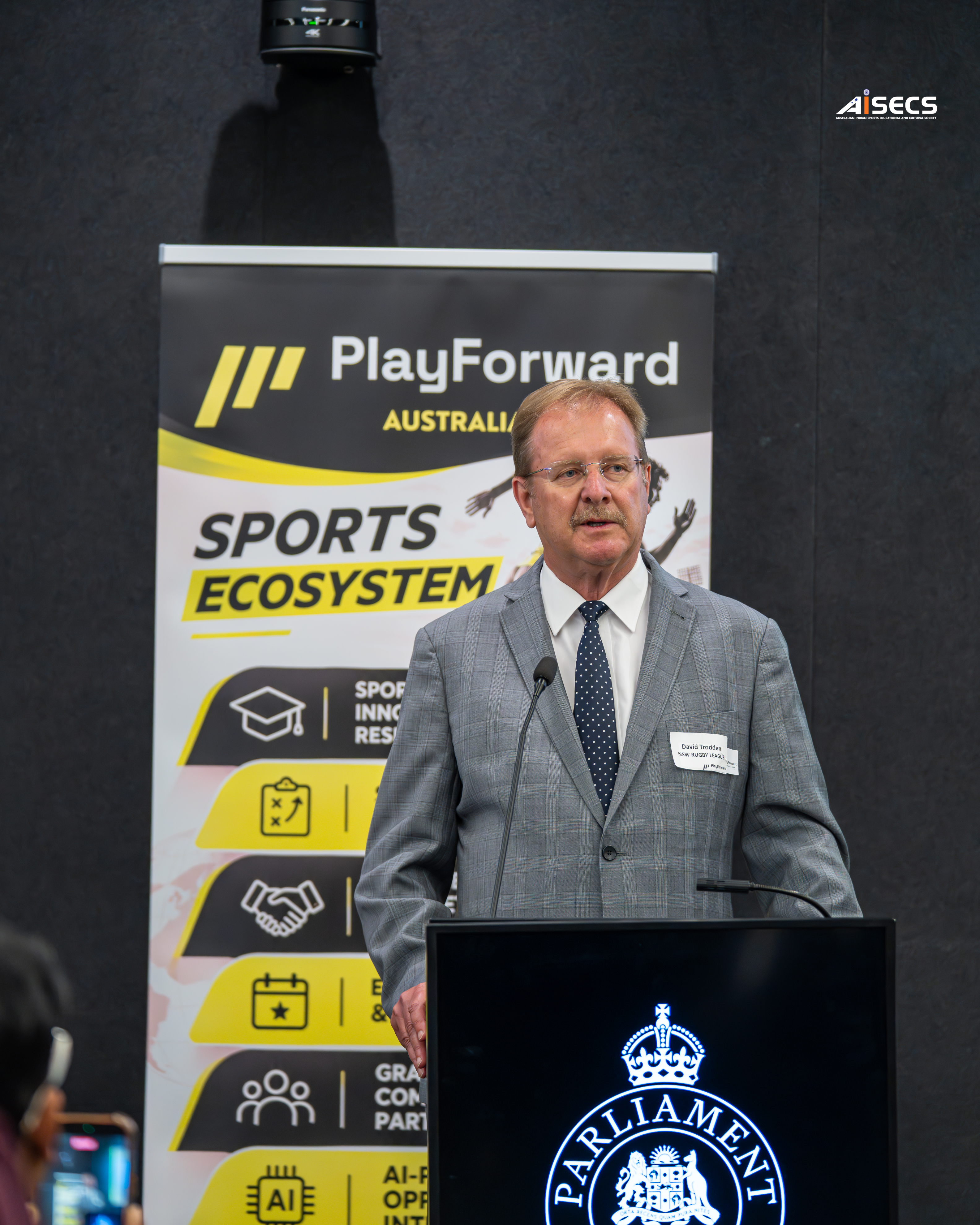
The PlayForward perspective
At PlayForward, we see developments such as Woolloongabba as part of a much larger opportunity for sport.
Australia's sporting strengths extend beyond its major venues and elite competitions. They include education, coaching, sports science, community participation, athlete welfare, inclusion and institutional expertise. India's sporting landscape offers its own scale, talent, knowledge and opportunities for collaboration.
Connecting these strengths requires more than organising competitions or signing partnership announcements. It requires people and institutions to work together, identify shared priorities, develop practical projects and build relationships that can deliver long-term value.
The India–Australia sports relationship has an opportunity to grow through schools, universities, sporting organisations, coaches, researchers, athletes and community networks.
The Woolloongabba arena is an important development for Brisbane. Its ultimate significance, however, will depend on what happens around it and what opportunities it helps create.
The question is not simply whether Brisbane can build a world-class arena before 2032. It is whether the city can use that investment to help build a stronger, more inclusive and more connected sporting future.
An invitation to educators and the sporting community
PlayForward is building an independent Australia–India sports collaboration ecosystem, connecting people and organisations interested in education, sport, research, coaching, athlete development, women's sport and Para-sport.
We invite physical education teachers, school leaders, university academics, sports educators, coaches, researchers and sporting professionals in Australia and India to join the conversation.
If you have expertise, research, programmes or ideas that could contribute to meaningful Australia–India collaboration, we welcome you to become part of the PlayForward ecosystem.
Because the future of sport is not built by venues alone. It is built by the people who make opportunities possible.
Explore: www.playforward.au
- Queensland Government – Gather Brisbane selected to bring new Gabba arena and precinct to life.
- ABC News – Queensland government reveals successful tenderer for $1.4 billion Brisbane Arena (15 November 2026).
- Queensland Government, Delivering 2032 – Gabba’s game-changing entertainment and housing precinct.
PlayForward लेख आधिकारिक स्रोतों और PlayForward व्याख्या को अलग रखते हैं। यहाँ कुछ सरकारी नीति नहीं है।